I thought I might do a post where I show you around the boathouse. Actually, that’s going to come later, in the “I joined the boathouse!” post later in the summer. But let’s see what kayaks we’re working with here. We have 22 altogether and although I don’t know exactly where most of them came from, I suspect we’re something of a kayak “rescue centre”.
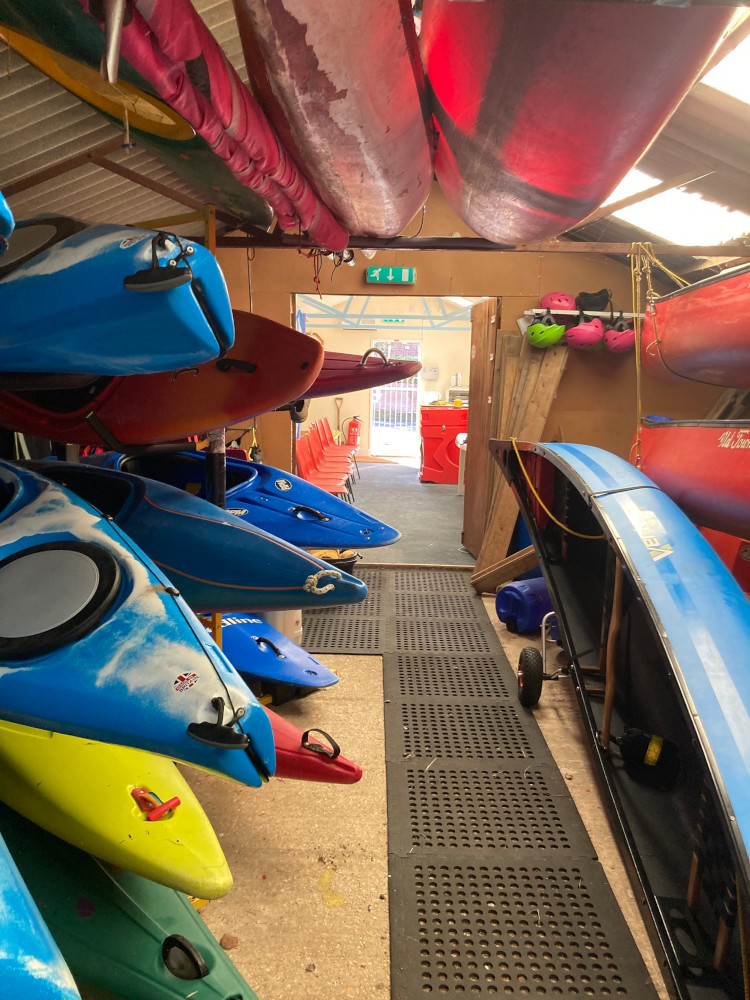
The pictures of each kayak underneath made the boathouse look really messy and it’s not so I’m going to start with a picture of our boat room to give you an overview of how much space we’ve got and how we’re storing the kayaks.

Let’s get the five “horrible green things”, as they’re labelled in my database, out of the way. Some local Sea Scouts gave us five Falchion 385s a couple of years ago. I can’t quite decide if they’re made by Palm or Perception or indeed neither – the impression I get from the second hand ones on the internet is that this is a Chinese brand. They’re exactly the sort of thing I’m used to – or so I thought. They’re long and thin (12’7″), like the Perception Essence 17 I got out in at Studland, but they’re too thin. The rest of the boathouse people say you need to be thin enough to get in them but heavy enough for them to sit low enough in the water that you can actually get it to move. Our Guides generally aren’t heavy enough and our leaders are heavy enough but not thin enough. I want to like them. My main issue is that there’s a huge wedge of foam where my legs should go. I’ve not entirely given up on the idea of cutting the foam out and putting some airbags in it so I don’t completely lose the buoyancy but mostly when I’m out in them, I’m loving the way they move but dreading capsizing because no way will I be able to escape.
Between writing this and going to the boathouse for the pre-season clean-up, it turns out those five boats got sold and we now have tons of room in our dry room!

Next, we have four Islander Jives. These are the ones the adults tend to use. We’ve got one that I think is missing some footrests, one that’s fitted for our main instructor, so it’s marked with a piece of colourful rope, and I take whichever of the other two is most accessible that session. They’re a lot shorter (10’7″) and a lot wider than I’m used to, almost like a floating sofa. They’re designed to be happy floating at 45° so they’re difficult to tip over by accident, which also makes them difficult to balance on two chairs while you’re washing the salt off them. I hated them at first but I’m getting used to pretty much just lounging around on the water now. Helped by the fact that I now take one of the nicely-shaped Falchion paddles rather than our very square and very flat normal paddles, I think.
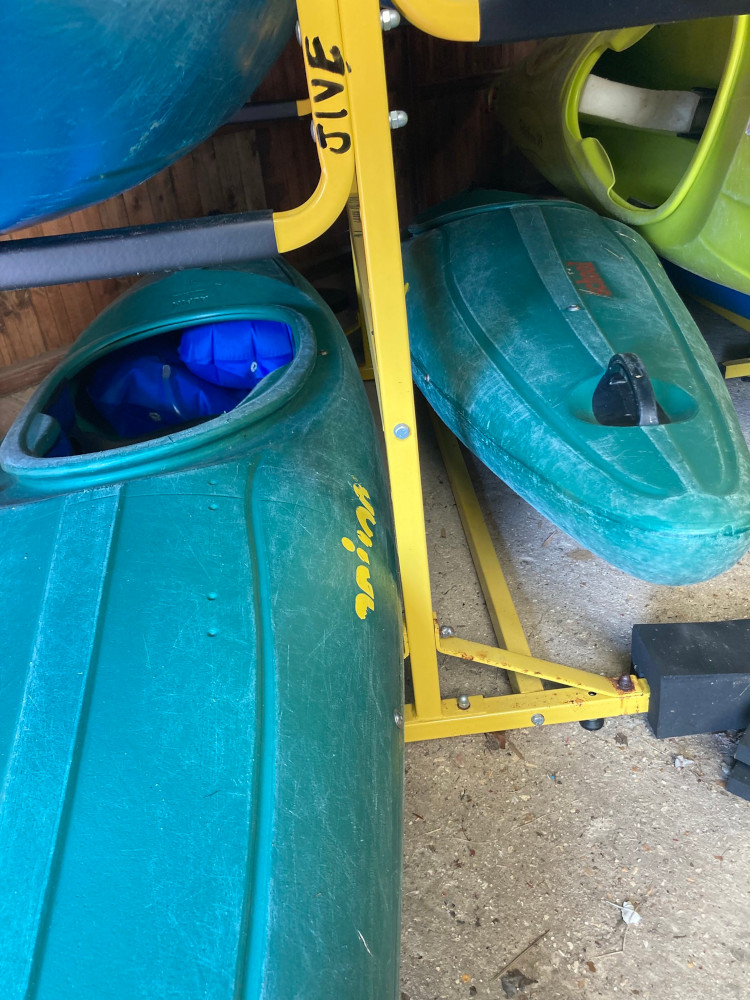
Next, we’ve got two dark green plastic kayaks that look like they date back to the very earliest days of plastic boats and all I can identify about them is the word Prijon on the front. They’re relatively long and thin and so we tend to put the older girls in them.

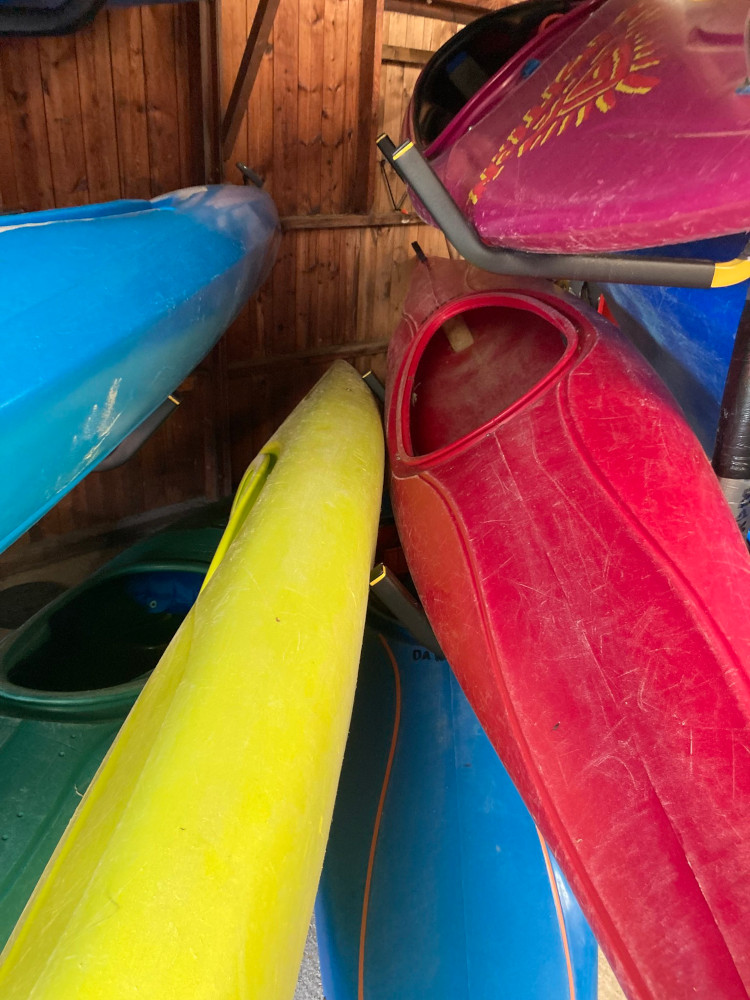
Sticking with our long thin boats, we’ve got two Perception Dancers, one in blue and one in red. These are also used by our older girls and we tend to put the boat club girls in them too. I’d like to have a go – at 11’6″, they’re by far the longest boats in our collection, if you don’t count the Falchions (which are piled up in our dry room, not in the boat room).

The ones we use with the smallest Guides are the Dagger Dynamo (7’3″) and we have two of them, one red and one yellow. I get the impression this is either a really small light whitewater boat or a whitewater boat specifically for children. This sits so low in the water that it needs to be reserved for the very littlest paddlers, otherwise it fills up with water and sinks.
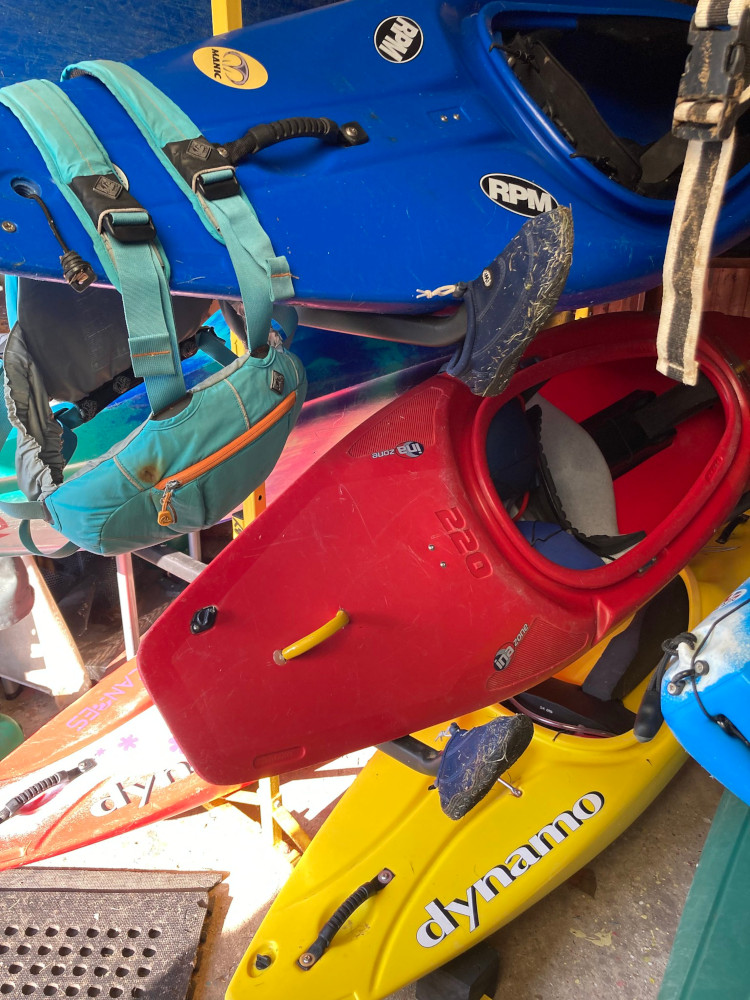
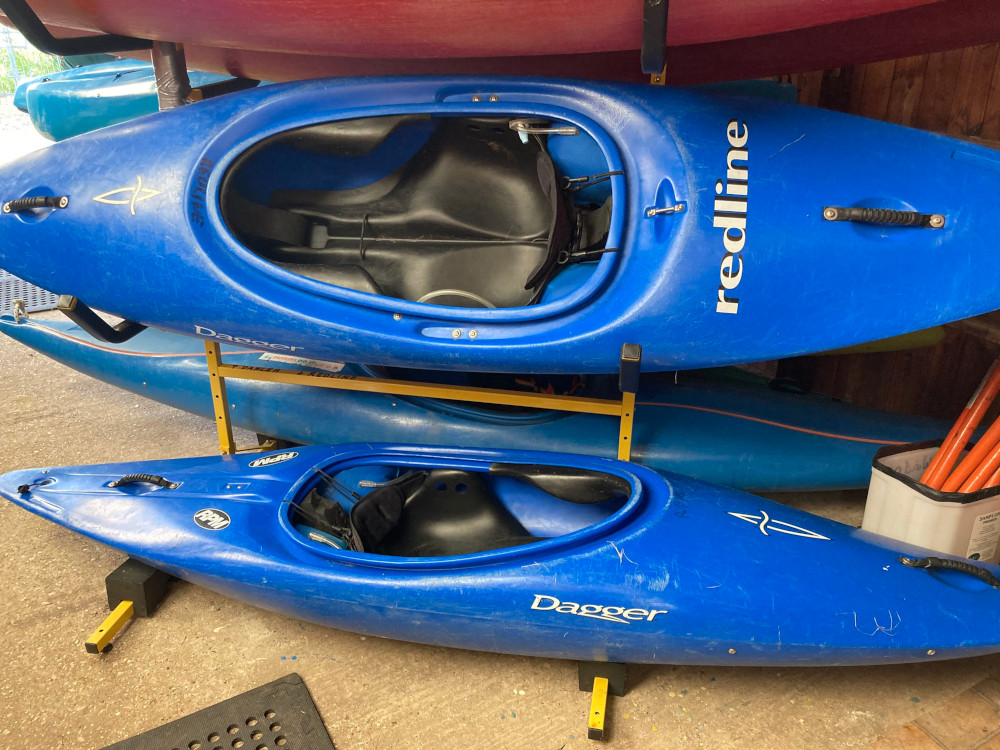

Similarly, but a little bigger, we have one red Piranha Inazone (7’7″), one blue Dagger Redline (8’6″), three blue Dagger RPMs (8’11”) and a Wavesport Forplay (8′), which are all around the same size and which we use as medium boats for paddlers who are neither particularly big nor particularly small. The RPMs and Redline are the go-tos when we have smaller groups.

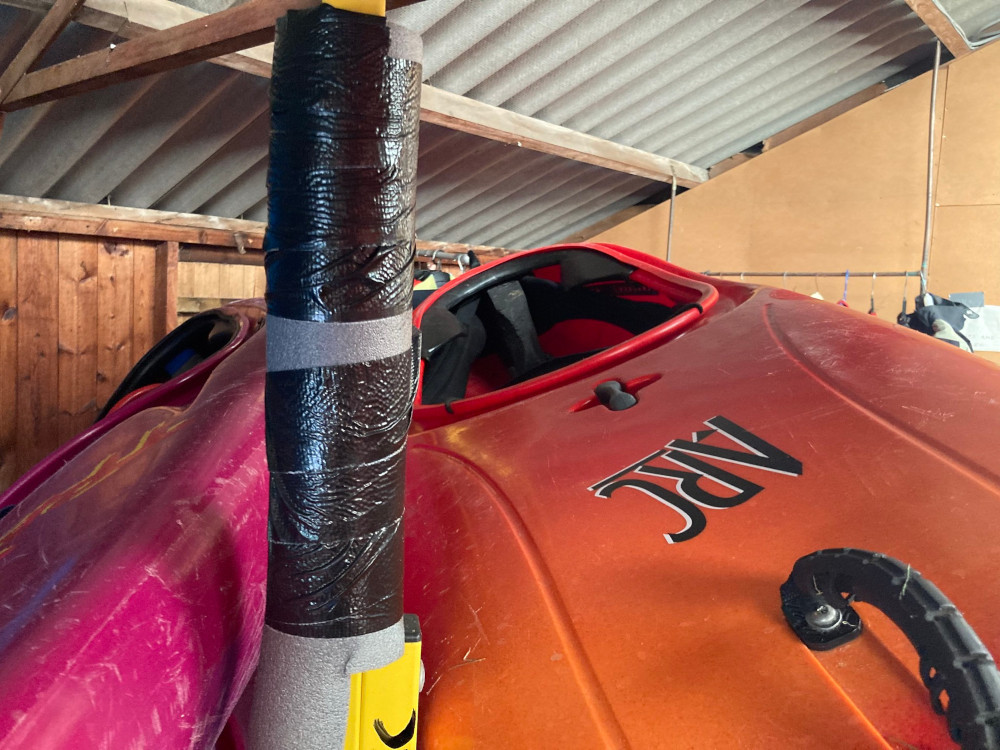
Two of the leaders have their own boats which no one else uses. Our main instructor has a dark pink Dagger Transition (10’1″), which she doesn’t use because she’s in the Jive. It’s a little small and a little less suited to the sea than the Jive. I’m in a Jive too and the other kayaking assistant has a Perception Arc (9’3″) in a red/orange ombre. Our third assistant uses a canoe, the blue one – I don’t entirely know why but it’s useful for keeping stuff in and we can shove girls in there if they can’t paddle for any reason, so it’s not a bad thing to have out with us, except when it comes to carrying it between the boathouse and the shore.
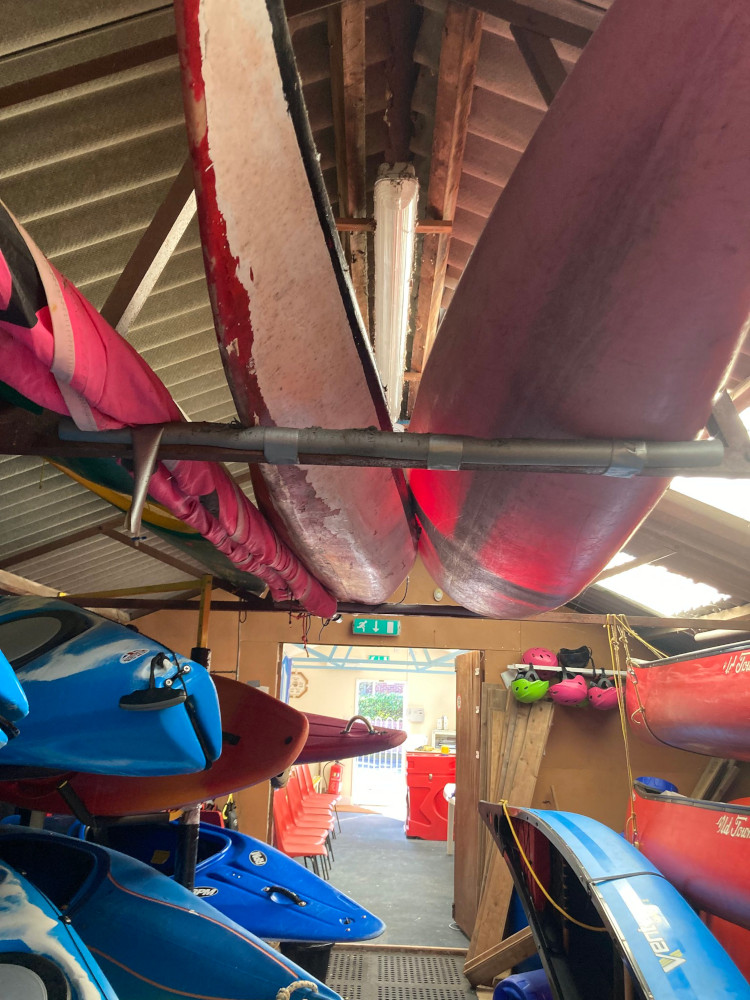
We do have a few more kayaks up in the rafters. The pink one on the right is now for sale and we’re probably just going to dump the other one. I have no idea what it is – it doesn’t look very seaworthy but the pink one surprised me. I suspect it’s some kind of sailing kayak. We also have a couple more canoes, just visible on the right of this picture, which we get out if we have a group too big for our kayak supply, you can pack three or four in each, which almost doubles our capacity, but they’re hanging from the ceiling and probably a little awkward to get down and back up again.
Are any of these boats ideal for a first-ever paddle on the open sea? Not really. Were they free? Probably. We’re not overwhelmed with money at the boathouse. It’s run by five volunteers and funded entirely by the boat club, group visits and our annual on-shore activity evenings. We can’t afford to be picky with donated and rescued kayaks, except the Falchions. But, you know, if you’re looking to rehome actual sea kayaks sized for teenage girls, we’ll gladly find somewhere to put them!
 Bumblebee Paddles