By this point, I was starting to consider my paddling future. I’d run an archery session in a named storm for our local Inspire group – that’s Girlguiding’s newish 18-30 not-a-section – and one of them had mentioned having access to 24 kayaks and wondered out loud what qualifications someone would need to take Inspire on an adventure in them. After Explore, I’d looked at the pathways I could go down, which seemed either leader/instructor/coach or specialising in particular paddling skills. The various sea kayaking qualifications seemed the ones that made the most sense for me, since I do all my kayaking on the sea but on the other hand, I was nowhere near ready for the sea kayaking skills I’d need. Or did I want to do my Instructor qualification to do this Inspire session one day? I hadn’t decided but I realised that learning to capsize, escape and get back in my boat was something that was going to be useful in general but essential whichever path I ended up on.
Pool sessions exist! I came across them by accident while looking for training courses and immediately decided that I needed to do one. It’s a good two hours up to Reading, where this particular session was held but I thought it was worth it. I was heading for a school swimming pool set in a huge leafy estate. The pool was in a greenhouse with a retractable roof but there had been another storm a week or so earlier and some of the roof panels had broken. To compensate for the fresh air coming in, the school had turned up the pool temperature and so it was really toasty. It’s a bit of a drawback to a paddler to have such a dislike of cold water but if I could get comfortable with the basics in the pool, that would be good. Warm water, no more than two metres deep, where I could see the bottom at all points – those were exactly the conditions I needed to learn this thing that was scaring me so much.
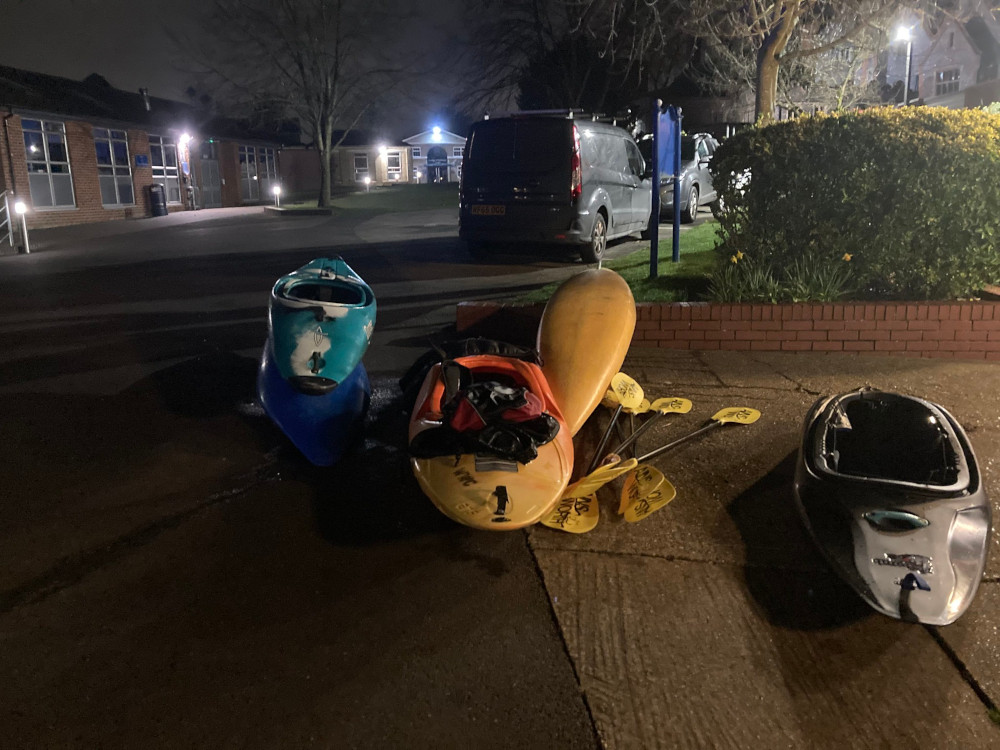
I pretty much had my own tutor for the session. We started with getting in the kayak from the side of the pool, paddling around a little to demonstrate that I wasn’t a complete beginner and then to falling out of the boat without a spraydeck. Once I’d done that a couple of times – and hauled the kayak up on the side to drain it again and again – it was time for the spraydeck. We practiced putting the spraydeck onto the cockpit, finding the loop with my eyes closed and then it was time to capsize.
The one element I hadn’t considered was the chlorine. The sea will taste salty and fishy but it doesn’t burn the back of my nose like chlorine does. I tipped myself over, found the loop, pulled it and escaped from the kayak, emerging on the surface with my eyes squeezed closed, trying not to inhale any of the water that seemed to be in every part of my being and slightly disoriented from being upside down under the water.
We did it again. And again. And gradually I began surfacing less shell-shocked, less confused, less horrified. I think I will never enjoy capsizing but I could kind of do it.
Next was to have a go at capsizing and being flipped back upright. That’s the next important skill because it means you can get back upright and get back to paddling without the hassle of righting and draining the kayak and getting back in. Ultimately, I need to be able to roll myself but at this stage, we’re still getting used to the feeling of the boat turning and finding myself back on the sunny side with the boat still attached to me. Practising this is probably more about getting me used to being under the water but without losing time setting up for the next roll. My instructor stood in the water in front of me, tipping the kayak this way and that way and then turning me over when I wasn’t expecting it and after repeating that enough times, I started to come up giggling. Honestly, if I accomplished nothing else that evening, I recognised the value of going from “I hate this, it’s the worst” up to giggling.
We’d pretty much accomplished what I’d come for but we still had half an hour so my instructor decided that we’d use the time to practice my supporting strokes, the low brace and high brace. I’d done these a couple of times, notably on my Discover/Explore weekend, but I’d not done it for real. I mean, I still haven’t done it for real but with my own personal instructor tipping me, I actually could brace as I came within inches of capsizing. It definitely feels different smacking the water when you’re tipped over at 45° to when you’re sitting upright. Of course, I messed up and overbalanced and went over a few times and my instructor accidentally-on-purpose tilted me too far a couple of times too but again, I came up giggling.
If it wasn’t two hours away, I could cheerfully have gone every week and repeated the exercise until I was happy to capsize and maybe even able to roll. But it’s far too far to go regularly. Nonetheless, I’d achieved something and that evening went down as one of my highlights of 2022. I think this was the moment I went from “I quite enjoy paddling” to “I want to take this further”. And although it’s going to be another month until it’s published, I’m now just an inch from finding my way of taking it further.
 Bumblebee Paddles
One thought on “Learning to capsize”