It only seemed five minutes since I was looking at the three levels of Sea Kayak Awards and deciding that was way beyond me when I found myself down at Studland on a miserable grey April day. Apparently I was going to spend two days doing my Sea Kayak Award. Why did I do this? Partly because it seemed a handy thing to have when I joined the boathouse, to show that despite my lack of leadership qualifications I was still keen – but probably mostly “because it was there”, available via my favourite commercial provider. Given where I paddle, Sea Kayak awards seemed like the obvious route of the so very many routes open to me, I just didn’t think it would be so soon.
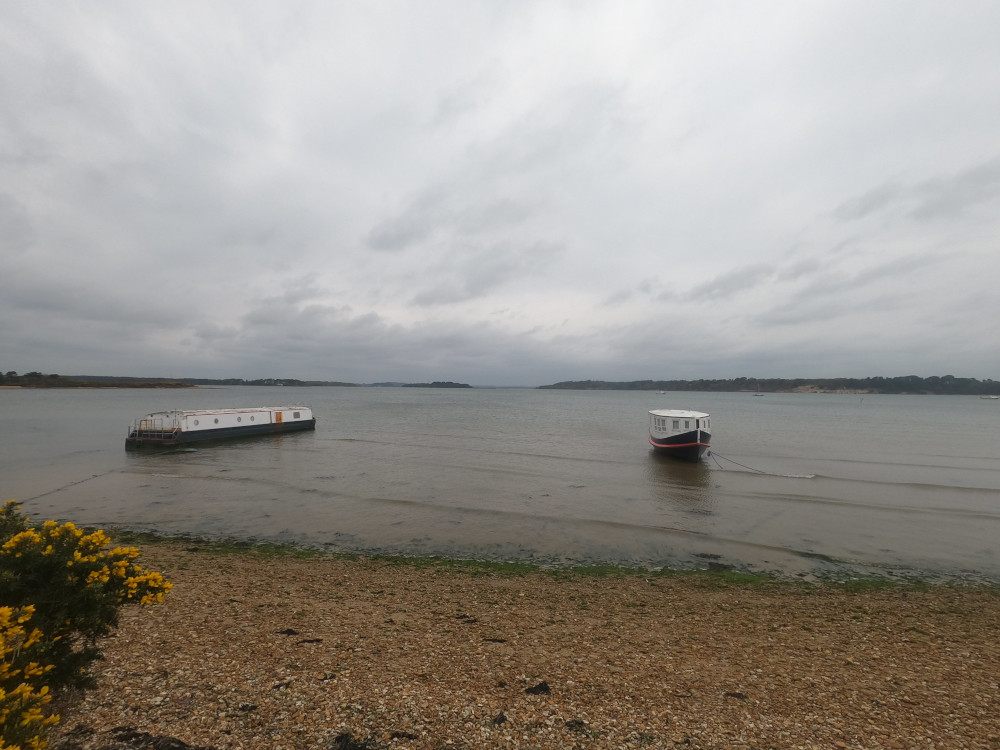
I’ve done a little training before. In fact, in 2016 I did my RYA levels 1 & 2 in dinghy-sailing (it was Not For Me). But it was all enough to know that it would be a good idea to check both tide and weather before I got there. Tick, instant teacher’s pet. The morning was spent on the basics – how to get a spraydeck on, paddle forwards and backwards, turn a boat that doesn’t want to turn and generally learn to handle seventeen feet of kayak. I’d done enough of their half-day sea kayaking intros that I was good with all this. Lunch was back on dry land with a pile of maps, charts and books and then we went out for an adventure in the afternoon.
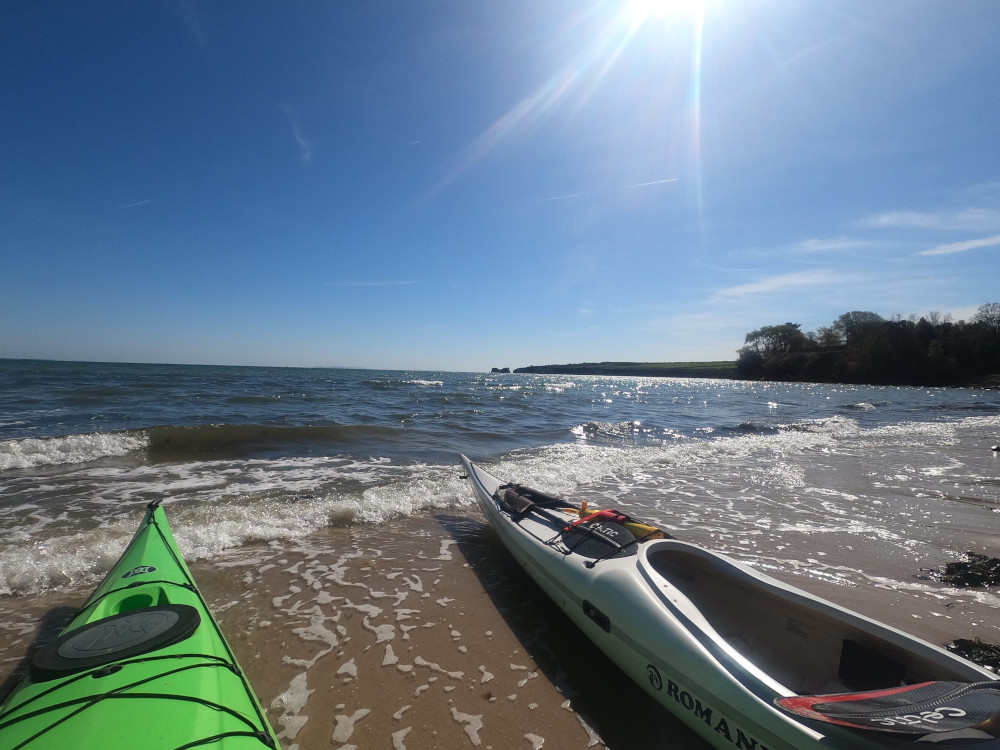
Testing your skills on a journey seems to be a fundamental part of paddle training. We took the familiar route along the beach and cliffs to Old Harry, then popped through. Not long ago, the bouncier seas on the unsheltered side of the headland would have terrified me but no longer, although it was probably rougher out there than I’d ever experienced. Now, at long last, I trusted my skills and experience to handle this.
We bobbed along the cliffs, sometimes inside the chalk stacks and sometimes outside, depending on what the sea was doing around them and what line we were already on, and finally turned into Swanage Bay. The original plan had been to land here but we couldn’t. I can’t remember why. Instead, we turned back after five minutes of looking at these gentler cliffs.
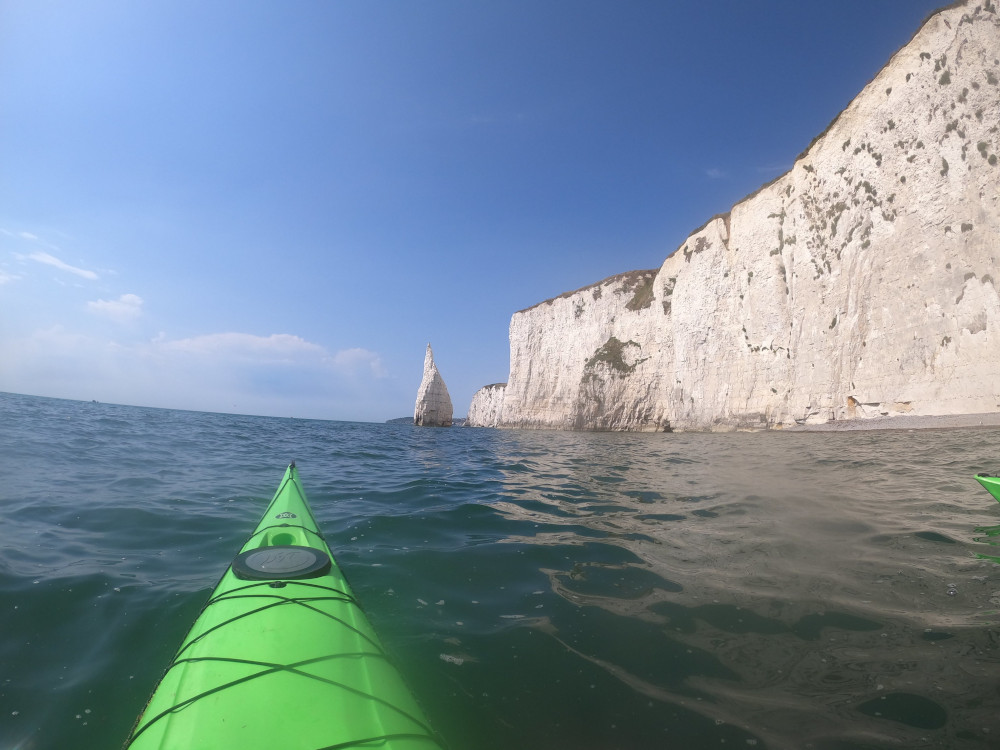
This was by far my longest ever paddle. By the time we were a quarter of the way back, fighting the wind and waves, paddling six strokes on the left to every one to the right in a futile attempt to keep going in a straight line, I called out despairingly to Dan that I couldn’t go on. Nothing five minutes rafted up and a contact tow back to the line I should be on couldn’t fix. The contact tow was something new from the morning session which I was to find useful. Anyway, once I was back up close to the cliffs, I successfully paddled on. We stopped and jumped out for a proper break on Old Harry – no matter how many times I land on the famous formation, the novelty never seems to wear off. Getting back to HQ was easy-peasy after that.
On the second day the weather was worse. Dan’s original plan was more work out by Old Harry but in stronger winds, it would just be doing the same thing again but more miserably. So we made the decision, with the help of a book of charts and a couple of weather apps, to go to Poole Harbour, right by the chain ferry and either spend the day in that corner or circumnavigate Brownsea Island. We heaved three kayaks on the roof of Dan’s car, loaded our kit into his and mine and drove a couple of miles down the road.
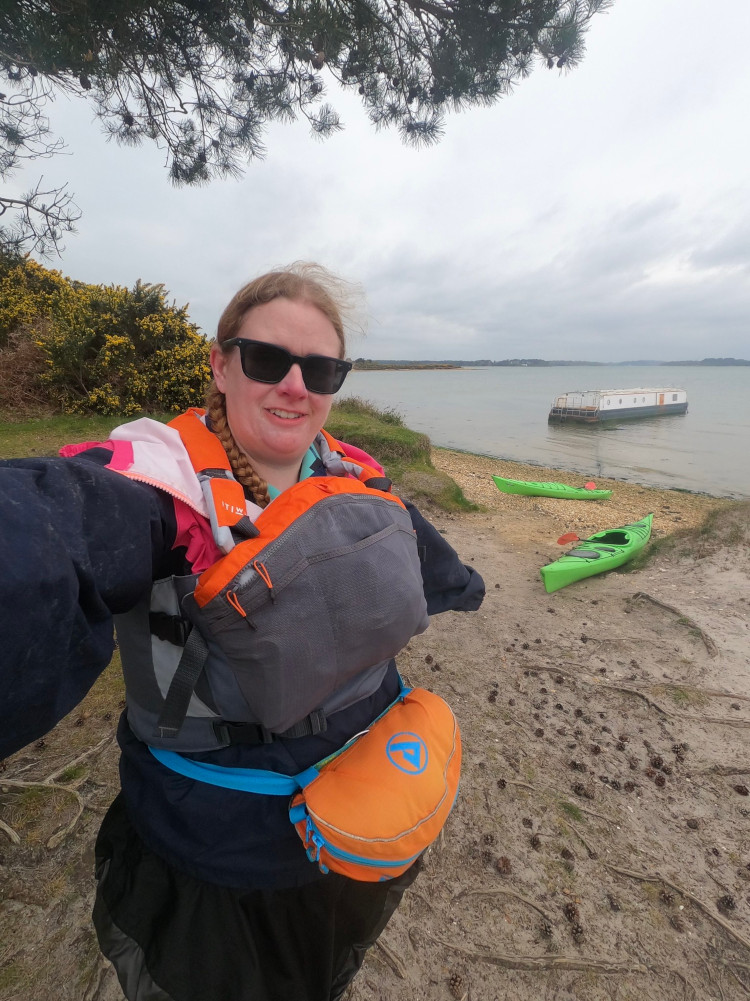
We circumnavigated Brownsea. Getting across was a bit of a mission, across the wind and close to the swirling currents produced by the harbour’s narrow entrance. We got swept to port a lot further than I expected but not as far as Dan expected. Brownsea’s north-east corner was hard work – guess who got taken in contact tow again? – but we sailed serenely past the lagoon and isolated beaches further along and then stopped for some practice – mostly the art of towing. We got to each be the tow-er and tow-ee of the contact tow and then we got out the tow lines to have a go at hauling someone to safety on the end of a rope.
We ate lunch on the beach at the western end of the island, my favourite place to watch a pastel sky turn navy if I’m camping there. I remember the white sand and gentle water of the north shore and my brain says it was a beautiful day but in fact it was chilly, damp and windy and Dan put us in oversized expedition jackets for lunch and the paddle home.
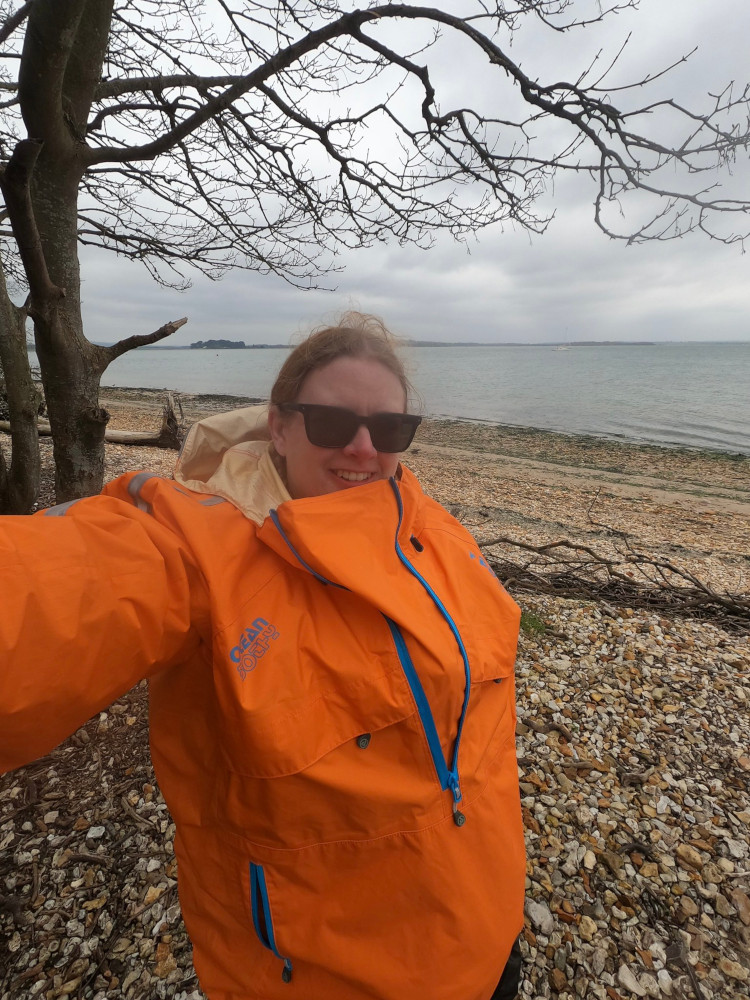
First we had to round the west end and paddle about halfway along the south shore with the wind coming across us. But worse was to come. We had to paddle a mile or so straight across the harbour, straight into the wind. I was the weaker paddler of the two of us on the course but along the south shore, my ex-army fellow student seemed to be losing his power. I thought nothing of it at the time. When the moment came to strike out for Studland, Paul offered to put us on a tow line if we thought we were going to struggle. Hand up. Might as well say it now. I’m going to struggle. So Dan clipped on a tow line. I’d still have to paddle, he couldn’t literally pull me across but I wouldn’t have to worry about going off course.
Off we went, the tow line slack between us and probably creating huge drag for Dan. But as we went along, it remained slack. I didn’t start to fall behind. Neither did I start to feel tired or frustrated. On the other hand, my fellow student had vanished. I couldn’t turn far enough in my bulky jacket and BA to see where he was. Assured that I seemed to be getting on OK, Dan took off the towline, showed me where to aim for and went to help the other.
I got on fine. I paddled steadily, not the least tired or out of breath. In fine nautical style, I sang out loud (not too loud!) to keep up my rhythm. In less traditional nautical style, my music of choice was Taylor Swift’s Red album, as much as I could remember in order. All Too Well (10 Minute Version) (From the Vault) (Taylor’s Version) is even longer than its title and a great motivator to just keep paddling. I was getting a bit concerned about the others, who I couldn’t see behind me and who hadn’t caught up but in the event anything dramatic was happening, the best and most helpful thing I could do was get safely to shore. Besides, nothing dramatic would be happening. It was merely that while I wasn’t so good at paddling across the wind, my fellow student wasn’t so good at paddling into the wind. Dan would tow and they’d get ashore sooner or later.
Land was noticeably closer by now. It’s harder to judge how fast you’re moving in a kayak when you’re headed straight for something than when you’re alongside something but I definitely felt like I was making steady progress – and with no more effort than when I’d floated serenely past hge bird beaches earlier. Houseboats got bigger. Details in the trees got clearer. I was approaching land at exactly the right spot. Dan had said to just get back to land and if I had to drag the kayak along the beach because I wasn’t 100% on course, that was fine. But I hit land exactly where we’d launched hours ago. I won’t say I exited the kayak with any elegance after that long paddle.
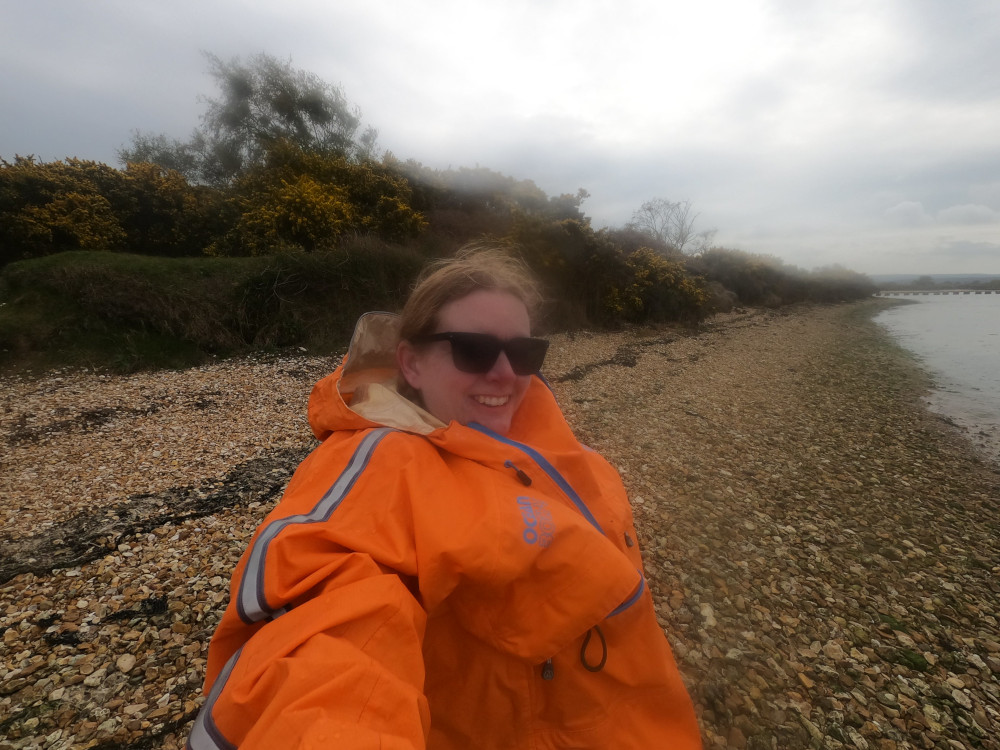
The only bit I was missing to actually get my Sea Kayak Award was a bit of self-rescue. But it was cold and windy, we were both tired, I’m a chicken about falling in the sea and I didn’t fancy getting wet now after staying dry all day. Dan’s solution was that he’d record my progress and I’d do a private day or half day’s tuition in the summer to do all the rescue stuff and complete the award. (At time of writing, over a year later, I still haven’t done it. Maybe I will by the time this is published…)
 Bumblebee Paddles
One thought on “Sea Kayak Award training”