One thing that we – and by “we”, I mean, the instructor, three assistants, manager & treasurer of our boathouse – have noticed over the last few years is a lack of resilence in the girls we take out to sea.
It’s very easy to talk about “kids these days!” but a lot of the people using the phrase aren’t actually having much more contact with kids than seeing them as they pass by. I dread to think how many years of experience the six of us have between us, what with Guiding, Scouting and working in schools but suffice it to say, if we’re saying “kids these days”, it’s not coming from a place of total ignorance.
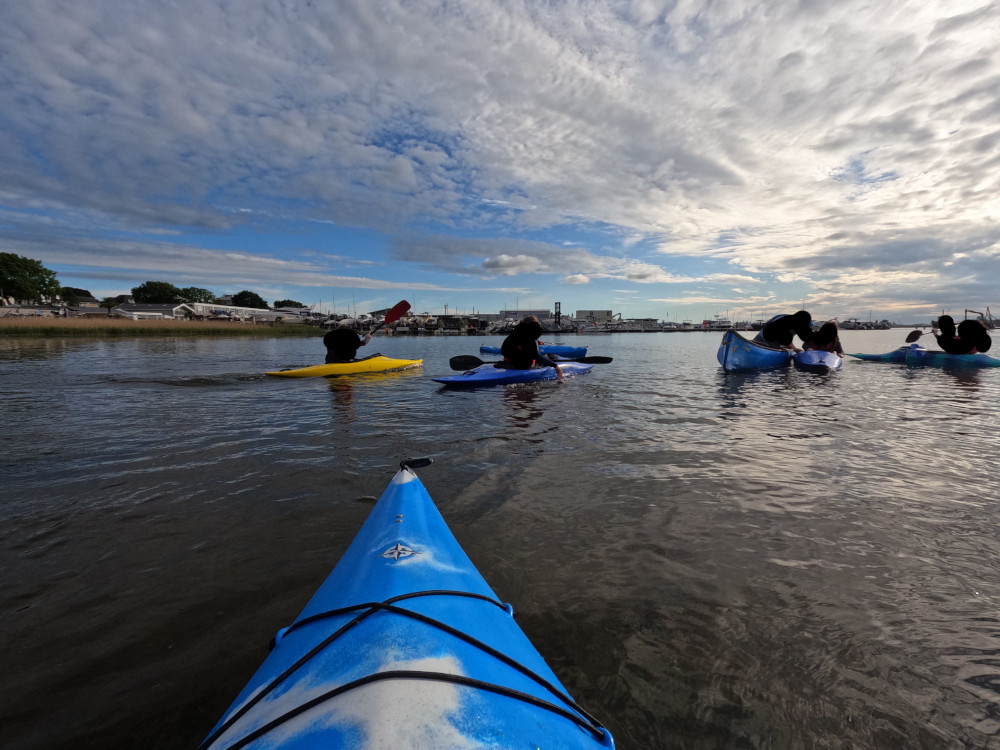
Resilience wasn’t a thing when I was younger. Maybe that’s a bad thing, maybe it’s not. We didn’t seem to have much that we needed to be resilient about. We weren’t living in a mental health crisis – and as far as I can see, all our efforts to make it better are just making it worse all the time. We had kids who were shy (hi!), we had people who didn’t like to talk to strangers, we had our problems but we didn’t have anxiety and when we were scared or shy, it didn’t dominate our lives in the way it seems to now. Could I sound any older or any more dismissive of mental health issues??
What I’m trying to say is that we have a certain proportion of kids who are nervous when they go on the water. They’re not nervous because they’ve never done this before or because they’re not strong enough swimmers. They’re nervous because they’re generally anxious. They don’t seem to have any concept of “let’s wait and see if this is something I should be concerned about”, they jump straight to the concern because that’s what they do and that’s who they are. Now, of course, we also have a certain proportion of girls who are just drama queens, who just like to shriek and fuss for no particular reason. I’m not even entirely sure it’s for attention. As leaders, it’s really helpful for us to know when we’re out on the water which of the kids we genuinely need to be worried about, which ones actually need a bit of special care, and which ones we can just leave until they’ve finished making a racket. We know our boat club girls and our own girls reasonably well but the girls who just come down for a taster session for the evening are, by and large, unknown quantities. Is Flossie screaming because she’s scared for her life or is Flossie screaming because she’s just a noisy child?
In my experience, in just two seasons at the boathouse, I’ve found that a lot of the girls who are nervous at the start gain a lot of confidence very quickly. I can only think of two girls in two years who’ve still been scared when I’ve towed them back to shore – and only two girls who’ve had to be towed rather than make their own way under their own steam. Everyone else, when given the chance, has discovered that actually, this is something I can kind of do!
One of our assistants has a theory: everything moves very quickly at school. These kids get through a lot in not a lot of time and they don’t have time to not be brilliant at anything first time. If they’re not brilliant at it within the first ten seconds, it’s likely the lesson will zoom away leaving them behind. Under those circumstances, you either learn to understand everything almost before you’re taught it or you give up and let your entire schooling wash over your head. Guides and Rangers generally fit into the first category – or certainly Rangers do. The younger sections go to Rainbows and Brownies because their parents send them but Rangers are there because they want to be there, and I’ve found the kind of girl who wants to be at Rangers is also the kind of girl who does pretty well at school. It’s not a hard and fast rule but I’m quite accustomed to being the stupidest person in the room and I love it. These kids know so much and they’re so enthusiastic and they have arguments I can’t even follow, let alone join in.
So when I hand them a bow or when they sit in a kayak, a part of them expects to be Olympic-standard immediately and when they’re not, they give up. They’ve never had a chance to learn, to struggle, to find their own way through something, to figure it out as they go along. Of course, we have limited time too – by the time we and the girls get to the boathouse, it’s 6pm and they need to be picked up by 9pm at the very latest, and it’s usually closer to 8 or 8.30. In that time, we have to get them kitted up, get the boats out, introduce them to everything they need to know, get out on the water, get back to shore, take the boats back to the boathouse, wash them, put them away and get the girls dried and dressed. It’s a lot to squeeze in. Often we barely get an hour out on the water but when you’ve got girls expecting to master it in a minute or two like they might have to at school, an hour is a lifetime.
The trouble is, you get so many that will use half of that hour to keep repeating that they can’t do it, they’re rubbish at it, it’s too hard, it’s too scary and they just don’t have the mental resources to put that aside and give it a proper try. I’m disinclined to be sympathetic with “I’m rubbish at it”. I’ve seen too many girls who turn out to be great at something once they put a modicum of effort into it (I have a Ranger who’s like this and has been pretty brilliant at everything she tries her hand at) and you can’t be rubbish at something before you’ve even given it a shot. Stop wailing, pick up that paddle, push it through the water one blade at a time and you’ll find you’re doing it without even realising. For all that the world tries to teach mental health coping methods and resilience and self-awareness, something somewhere just isn’t getting through and instead of defaulting to “I can probably do this”, they’re defaulting to “I can’t do this”.
This is one of the good things about Girlguiding. We don’t have exams, we don’t have pressure and we want to keep the girls for three or four years. I know no one loves the Skills Builder badges but in theory, you can spend fourteen years building your skills in particular areas – learning, improving, pushing yourself a bit further in every age group in a way that just isn’t possible at school. And we can do it at the boathouse too. Your first year as a Guide, you just get over the blinding terror that sets in when you sit down in your kayak. Next year you’ll start to enjoy it. The year after that you’ll master the basic strokes. Then you’re a Ranger and we take those basic skills and give you a slightly more advanced session. It’s a really slow progression – which can be speeded up by joining our boat club! – but it gives them the time and the lack of pressure that they really need, which seems to be the only way to break through the “I can’t do it” mindset.
Oh, the pressure! There’s the pressure in the fact that everything has to be done so quickly but there’s also a level of pressure that we didn’t experience. I have a Ranger who did four sets of mock GCSEs and one set of real GCSEs in a single year. We did year 10 exams (the school burned down halfway through them but that’s another story…) and mocks and then our GCSEs and that’s all. And of course they’re important and of course that was hammered into us but I feel like it’s hammered into them so much harder these days. We used to have older Brownies and younger Guides who’d take most of a term off because they had to revise for their SATs, tests that I didn’t really even realise were tests until I got to the year 9 ones. It’s more important than ever that they do really well in every test or exam they ever encounter and they encounter more of them than ever. No wonder these kids are buckling under the pressure.
That’s why I think Girlguiding is particularly important for exam-age girls – it’s a place where just once a week they can have a break. Maybe they’ll use that break to learn to steer a kayak. Maybe they’ll use it to light a campfire, or to work on a badge or just to scatter the topping of their choice on a ready-made pizza base and take unflattering photos of their leader and giggle over TikTok. I’d rather they do something worthwhile at Rangers but with the amount of adversity in their young lives, sometimes you can be a port in a storm and that’s worth a lot.
 Bumblebee Paddles