I’m almost surprised I haven’t done this yet. Get to know our boathouse!
I talk a lot about the boathouse because a huge part of my paddling life – or least the paddling life as documented on this blog – takes place there. So I thought it was about time I showed you around the boathouse, to give you an idea of what the place is like. Now, because this is a Girlguiding thing and involves young members, I try to be at least a little vague about where it actually is, which means any pictures from or of the outside are either going to be from strategic angles or have identifying details scribbled out.
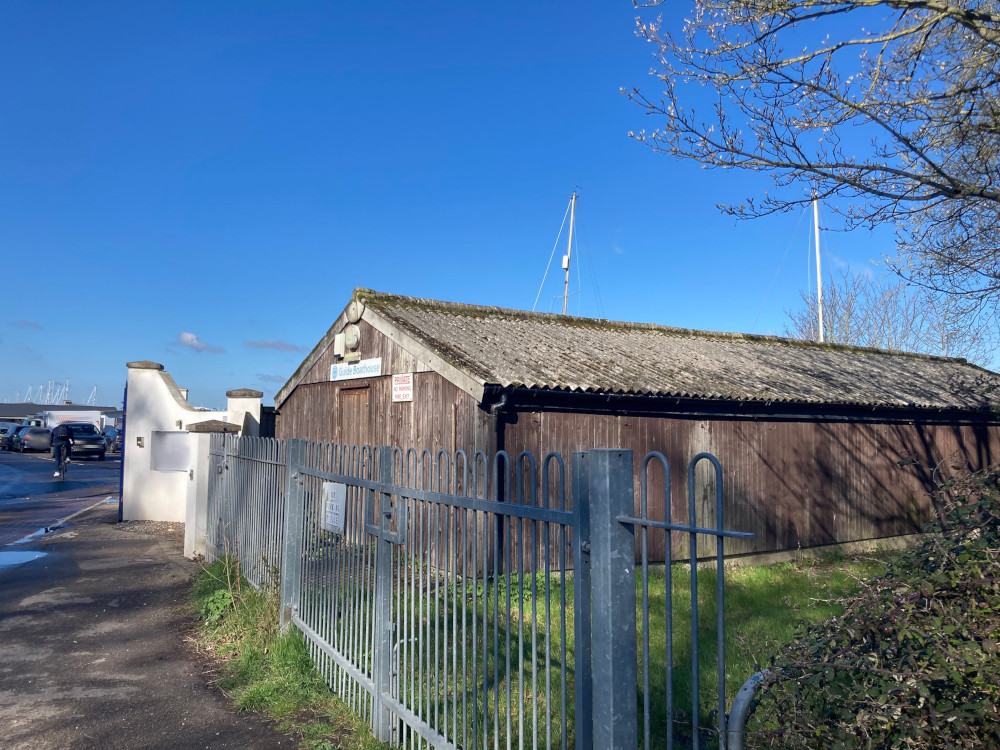
I don’t know how long the boathouse has been there or what exactly its story is. Our manager has been there – whether as manager or whether actually on the water – since somewhere around the mid-90s. I believe it was previously owned by two divisions it’s not actually in, it may have belonged to County at one point and it’s now owned by two different divisions, one of which it is actually in. There are seven of us on the boathouse team altogether at the moment. Our manager is a retired leader from the boathouse’s own division. I spent 35 years in the other division but joined the boathouse after I moved out of their. We have an instructor and an assistant who are both Guide & Ranger leaders not in either division. The next assistant is the manager’s son who is not a Girlguiding member at all – or at least, not attached to a unit. I guess there’s a possibility he’s a member of some kind if he’s attached to a facility like this. And we have a new assistant this year who we picked up last summer from a local unit coming down for the evening and who said “I wish I could come every week!”, to which we replied “You can! We always need extra adults!”.
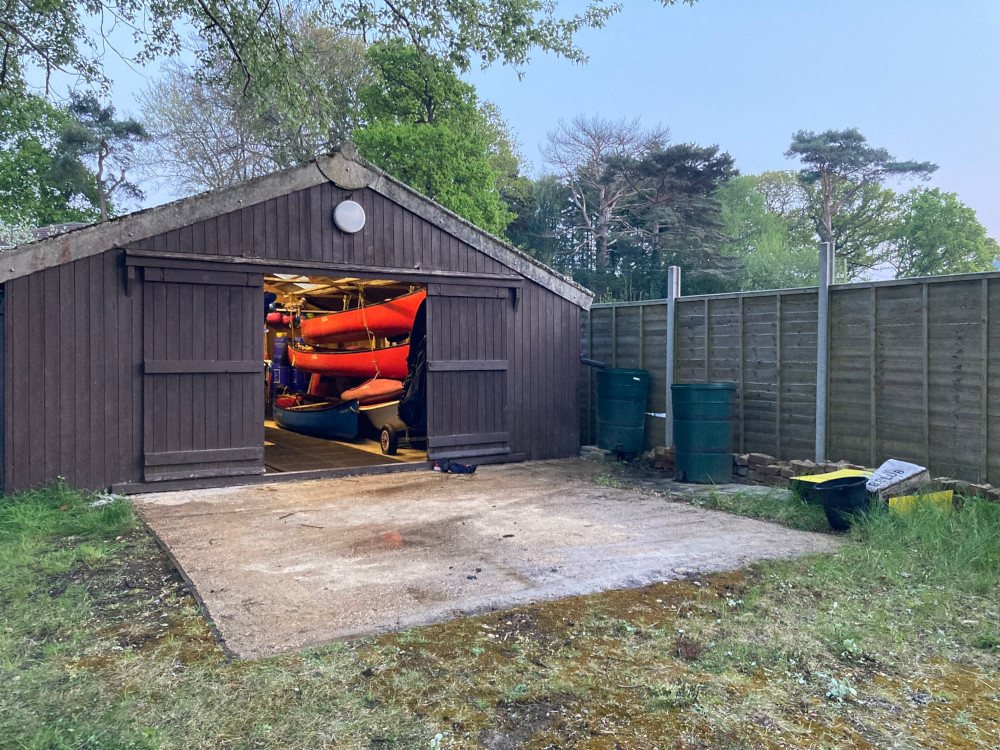
I’ll give you a quick rundown of the outside. We have a large rectangular plot surrounded on three sides by a big metal fence and on the third by a low stone wall and some prickly plants that no one wants to dig out because they’re prickly and form a natural barrier. At the back is our “sea gate” and if you walk through the long vegetation, you get to a small stony oily beach at high tide or an expanse of wet oily sand at low tide. The boathouse occupies the left-hand side of the plot as you look from the front gate and we have a “foot gate” in front of the door which we never open. We unlock the big car gate on the right-hand side and we then have space for three or four cars down the side of the boathouse. The girls and visiting leaders park at the public car park a couple of hundred metres away (free after 3pm) and walk. They tend to get to the foot gate and get confused at it being locked but the car gate is usually left wide open so they can come in there. Out the back of the boathouse is our “garden”, which has a big expanse of concrete slabs and then a lot of scrubby and/or overgrown grass. This is where we put the kayaks once we’ve pulled them off the racks so that everyone can adjust their footrests and get comfortable before we get out on the water. We put out plastic chairs on the concrete – or rather, our manager does while we’re on the water – and then we prop the kayaks up on them to wash them down afterwards. We have a water butt in the corner behind the boathouse to collect rainwater – we do have mains cold water but we try to limit our use of it.
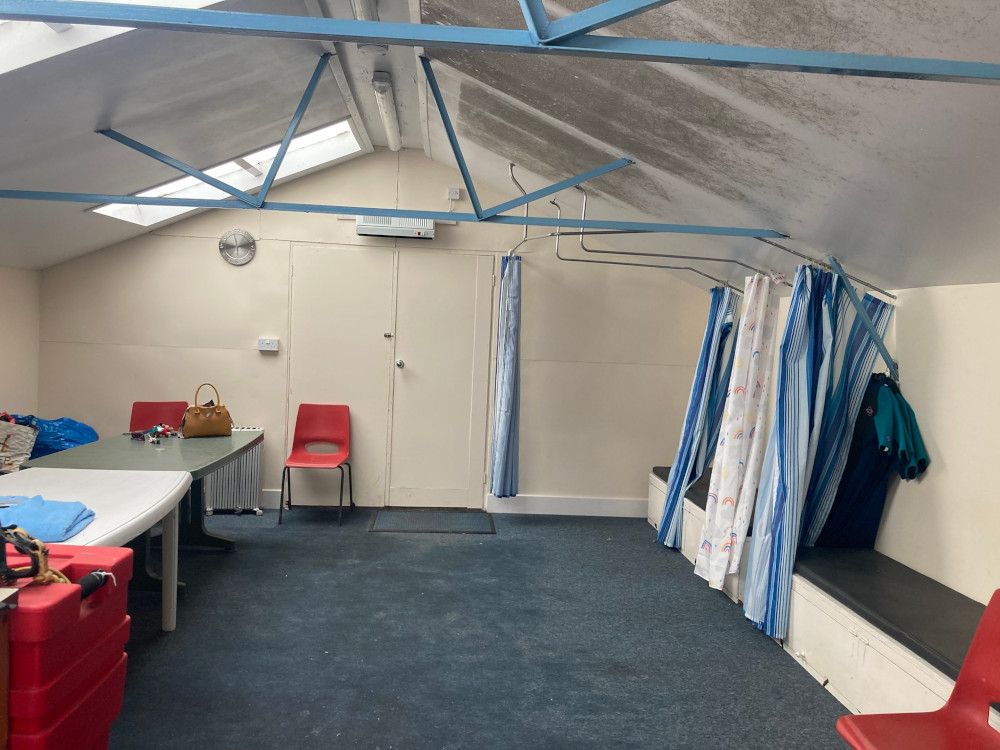
Ok, let’s go inside. The dry room is a big, fairly bare, fairly basic room. We have a kitchenette in the corner, with a tabletop oven, an electric urn, a sink with running cold water and various cupboards, drawers and shelves full of mugs and plastic plates and cups, random batteries and the usual sort of junk that Guide halls accumulate which comes in useful just after you decide to throw it all away. Along the left-hand wall is a row of box benches with cushions on top. I have no idea what’s stored in them. This is where the leaders tend to get changed and leave their stuff. We have a couple of plastic tables where we usually leave our bags.
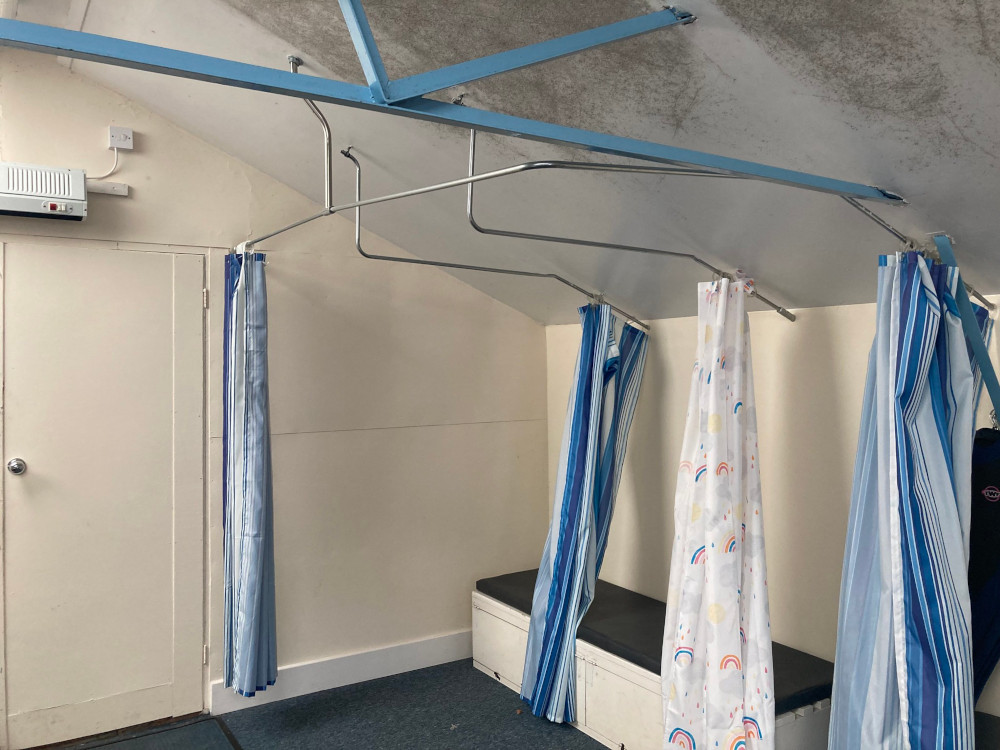
The right-hand wall has a matching row of box benches but where the kitchen is on the left we have an assortment of ladders, boxes, bags and general stuff. At the end, we have three cubicles made up of bars above the benches and shower curtains that we usually keep looped over the bars to give us seating space but which can be pulled down to make two changing cubicles. In my first season, this space was occupied by six kayaks donated by the Sea Scouts which we didn’t really use but last year we sold them and so had our cubicles actually available and usable for the first time.
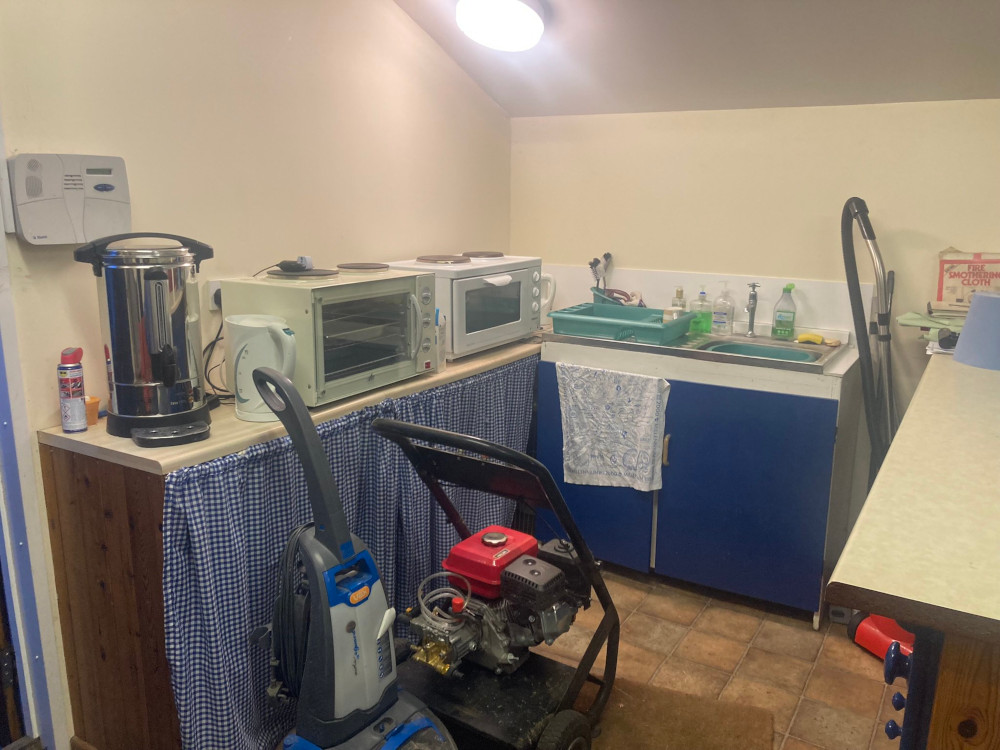
That’s about it for the dry room. We hire out this room, either for just the novelty of coming down to the boathouse for an evening of on-shore activities or as a space you can use when your hall has been coopted as the local polling station for the evening or as a convenient and relatively inexpensive place to hold a meeting or for whatever other purpose you can think of. It’s a fairly small space, so it’s not really practical to have as your regular hall, plus I don’t think it has any insulation whatsoever and no heating. In the summer that’s fine – it’s a bit of a greenhouse and tends to be really hot but I bet it’s freezing in the winter.
The dry room is strictly for dry things only. The girls can go in and out of the boat room in their wetsuits and muddy old trainers but all that has to come off before they’re allowed in the dry room, which is where they get dressed. We issue instructions to come with a swimming costume on under whatever they’re wearing on the water but once in a while, we do have to go for the spare towel robe for the girl who hasn’t. Yes, we have a spare rainbow-coloured changing robe hanging up. We have a lot of stuff hanging up – mostly a lot of small wetsuits hanging from various roof supports.
At the back of the dry room is a wall with a double door in it and on the other side of the double door is our boat room. There’s a sliding double door in the back of the boat room so we can easily get the boats in and out and in case anyone cares, it’s got three padlocks on it, on the inside.
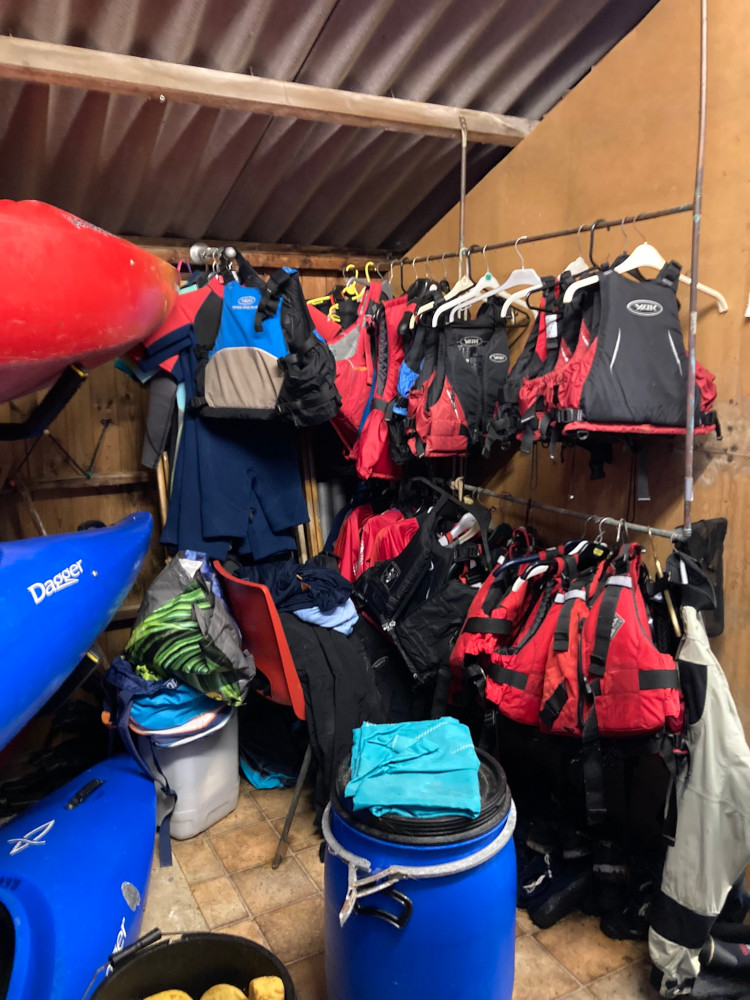
Just inside the door on the right is a double rack of buoyancy aids and waterproof jackets with a row of water shoes underneath them. On the left is our raft-building stuff, including barrels, planks, ropes and helmets, mostly hidden behind our chairs, which are more for putting the kayaks on for washing than for sitting on, although if you use the dry room, you can take the chairs in there.
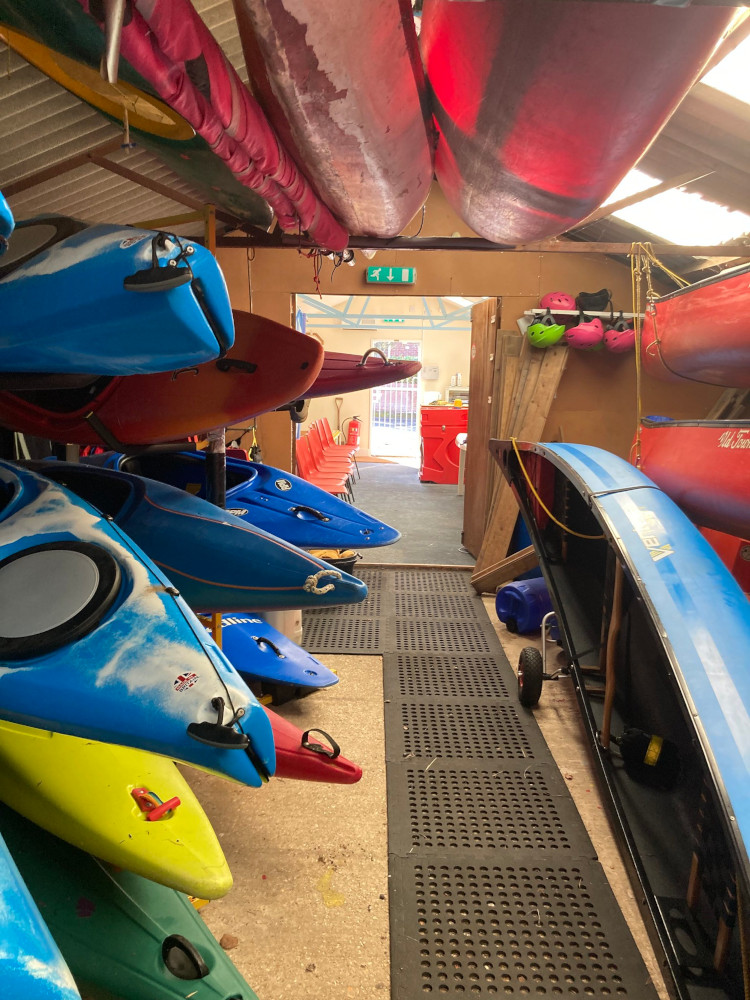
Along the left-hand walls are our racks of kayaks. We have three racks, I think, each with three kayaks on each side, so probably 18 kayaks in all. I’ve got a previous post about what kayaks we have, if you’re interested in that. Along the right-hand wall are our canoes. We have two red canoes that belong to the boat club hanging from a complicated system of ropes and then our assistant’s blue canoe on a trolley underneath them. We’ve only had the red canoes out once since I’ve been there but the blue canoe comes out every time that particular assistant is there, plus a few times when he comes down here by himself.
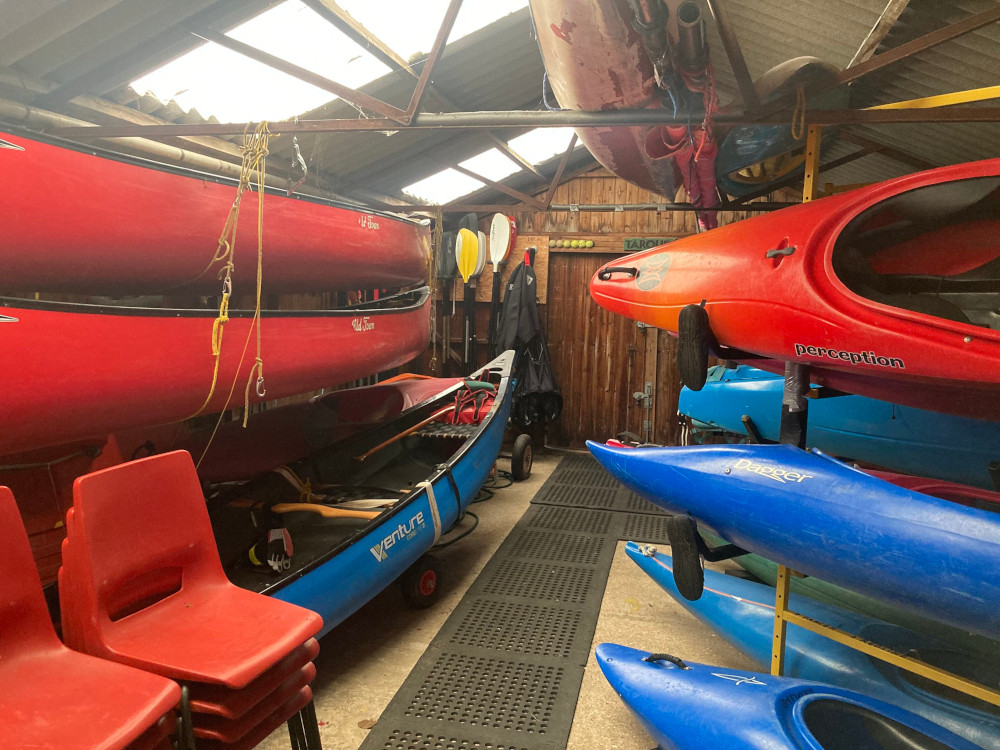
At the far end of the canoes is a rowing boat that we use purely for storage. This is where we tend to leave our buoyancy aids between sessions, hang up our towels while we’re on the water and where I always lose my sunglasses. Then, on the back wall next to the boat are racks of paddles and spraydecks.
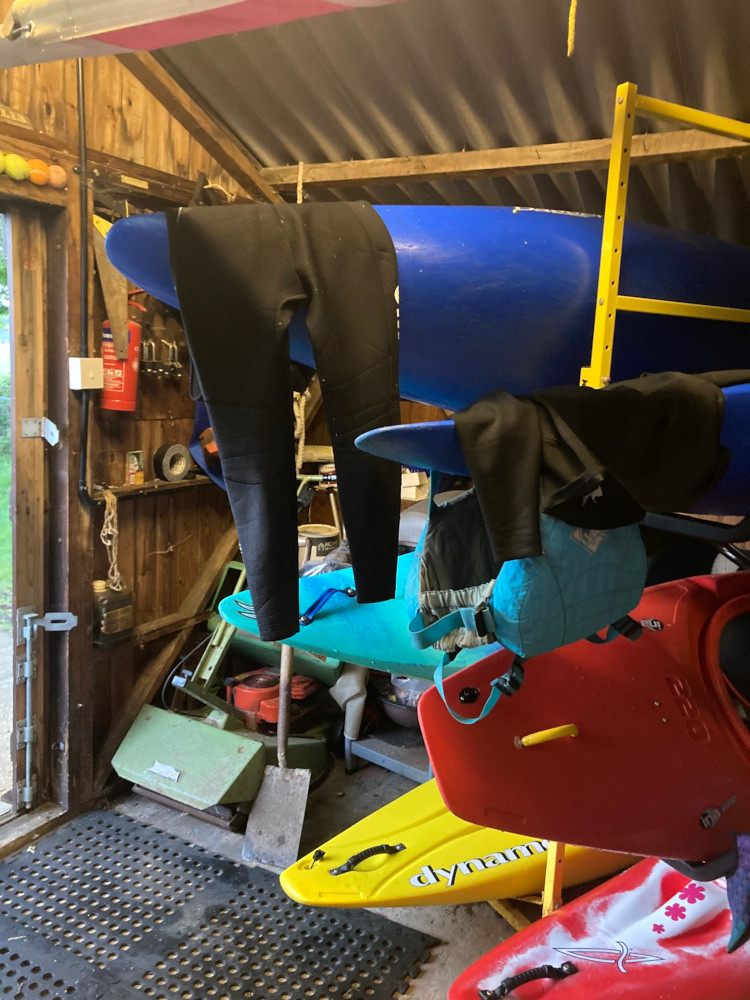
In the space beyond the kayak racks on the opposite side is some maintenance stuff – lawnmower, tools etc. We have a kind of shelf-slash-cubby hole above the door where we’ve got a row of tennis balls wedged in and then there’s the door and I think that’s it.
Oh, up in the ceiling rafters we have some old boats that we really need to either sell or dispose of. Maybe by the time this is published, that will have happened. We have some foam matting down the middle of the boat room and an extra layer which we carry outside and put on the concrete while we wash down the kayaks afterwards. It’s very light stuff that joins together with pieces like a jigsaw, the kind of thing you put in a toddler’s playroom except ours is black instead of pretty pastels. It makes fun popping noises when you walk on it with wet feet. Somewhere in the boathouse we also have a collection of black buckets stacked up, probably with the chairs, and there are some sponges in the buckets. I tend to keep a sponge in a mesh bag in the bottom of my kayak to put on wobbly paddlers to try to keep them in a straight line but they’re really for washing the boats.
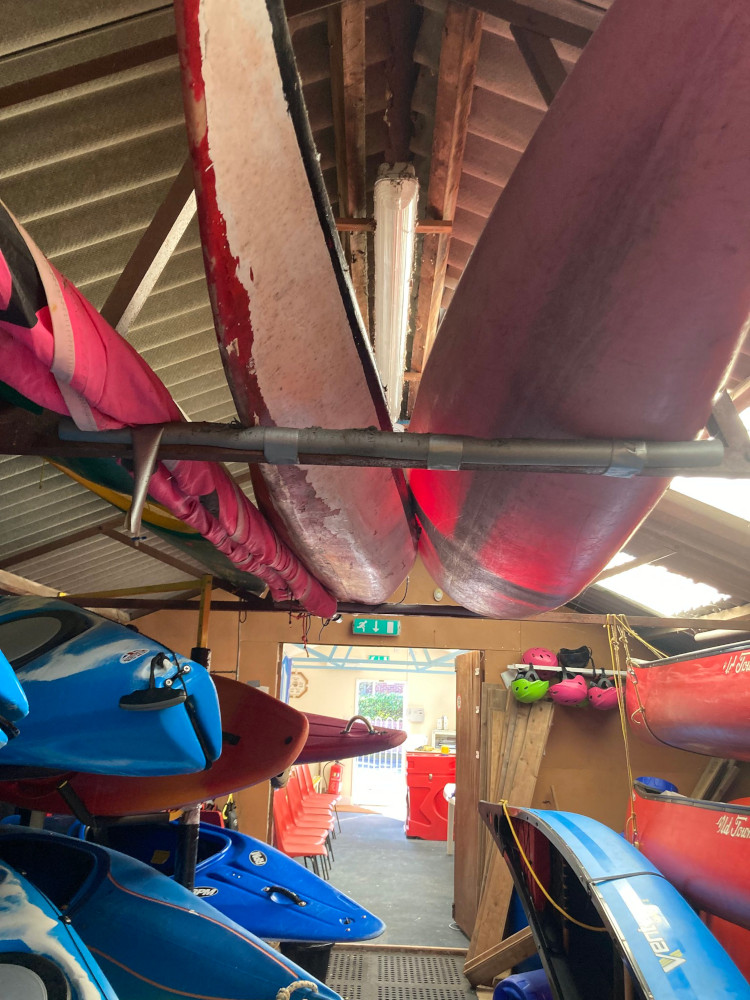
Most of the stuff we have is donated. Do you have any idea how much it would cost for a tiny volunteer-run boathouse like ours to buy eighteen kayaks and two canoes? Some of our kayaks are very old – I put together a little database when I was new, to figure out exactly what we had and exactly what it actually was and some of them are so old I can’t even get statistics on them. I think our wearables are new – “new” as in we bought them. We bought a handful of new jackets last year and we also bought a new towline – that tends to hang over the end of the blue canoe when it’s not in use. It makes it nice and easy to spot as we’re going in and out and makes sure we don’t accidentally leave it behind. I’d say it’s one of the very few things that doesn’t have a proper place – in a boathouse this small, we need to be tidy – but I guess the canoe is its proper place. The “proper place” we really need is for my glasses. I need my glasses to get around the boathouse but the moment I go outside, I want to put on my sunglasses, which means I inevitably misplace my glasses when I get back in.
And that’s our boathouse! I don’t know if you were picturing something more grandiose or even something closer to the water but that’s it, our very own, very precious Girlguiding division boathouse.
 Bumblebee Paddles